
Facebook Marketing remains one of the most effective digital marketing strategies for businesses of every size. Although several new social media platforms have gained popularity in recent years, Facebook continues to be one of the most effective platforms for businesses to increase brand awareness, engage with customers, generate leads, increase website traffic, and drive sales.
Whether you own a small local business, an online store, a startup, or a large company, Facebook provides powerful tools that help you reach the right audience at the right time. From creating engaging content to running highly targeted advertising campaigns, businesses can use Facebook to build long-term relationships with customers while achieving measurable business growth.
This guide explains everything beginners need to know about Facebook Marketing, including its benefits, features, strategies, best practices, and common mistakes to avoid.
What is Facebook Marketing?
Facebook Marketing is the process of promoting a business, product, service, or personal brand through Facebook. It involves creating valuable content, interacting with followers, building communities, and using Facebook Ads to reach specific audiences.
Unlike traditional marketing methods that broadcast the same message to everyone, Facebook allows businesses to connect with people based on demographics, interests, behaviors, and buying intent. This level of targeting helps companies spend their marketing budget more efficiently while improving campaign performance.
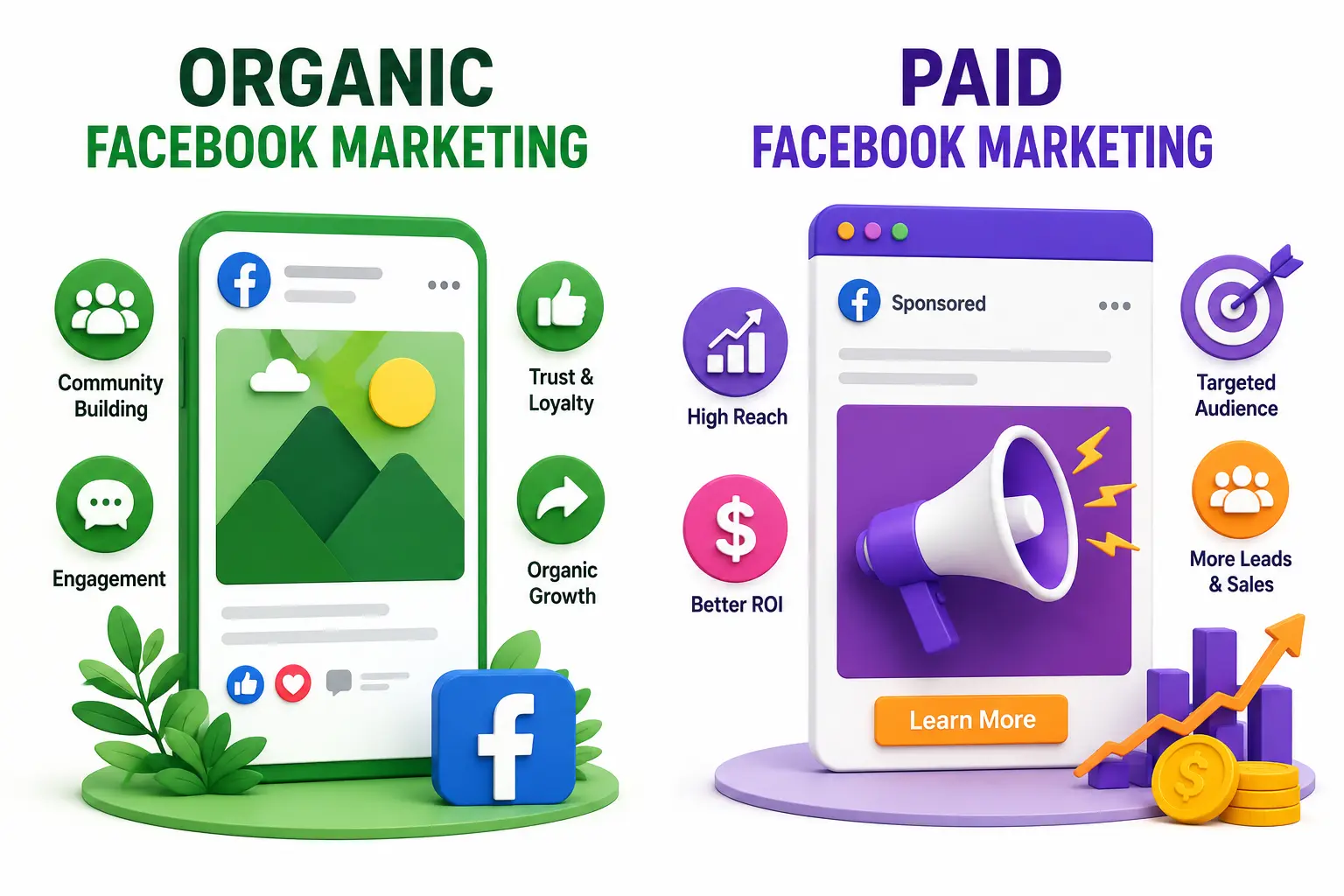
Facebook Marketing combines both organic and paid strategies. Organic marketing focuses on building an audience naturally through regular posts and community engagement, while paid marketing uses Facebook Ads to increase visibility, generate leads, and achieve specific business goals.
Why Facebook Marketing Still Matters in 2026
Many people believe Facebook is losing popularity because of newer platforms. However, Facebook continues to be one of the world’s largest social media platforms with an enormous and highly engaged user base.
Businesses continue to invest in Facebook because it offers:
• Massive global audience
• Advanced advertising platform
• Cost-effective campaigns
• Detailed audience targeting
• Powerful analytics
• Integration with Instagram
• Strong local business visibility
• High lead generation potential
People use Facebook to discover brands, read reviews, join communities, watch videos, communicate with businesses, and purchase products. These activities make Facebook an excellent platform for businesses seeking consistent online growth.
Benefits of Facebook Marketing
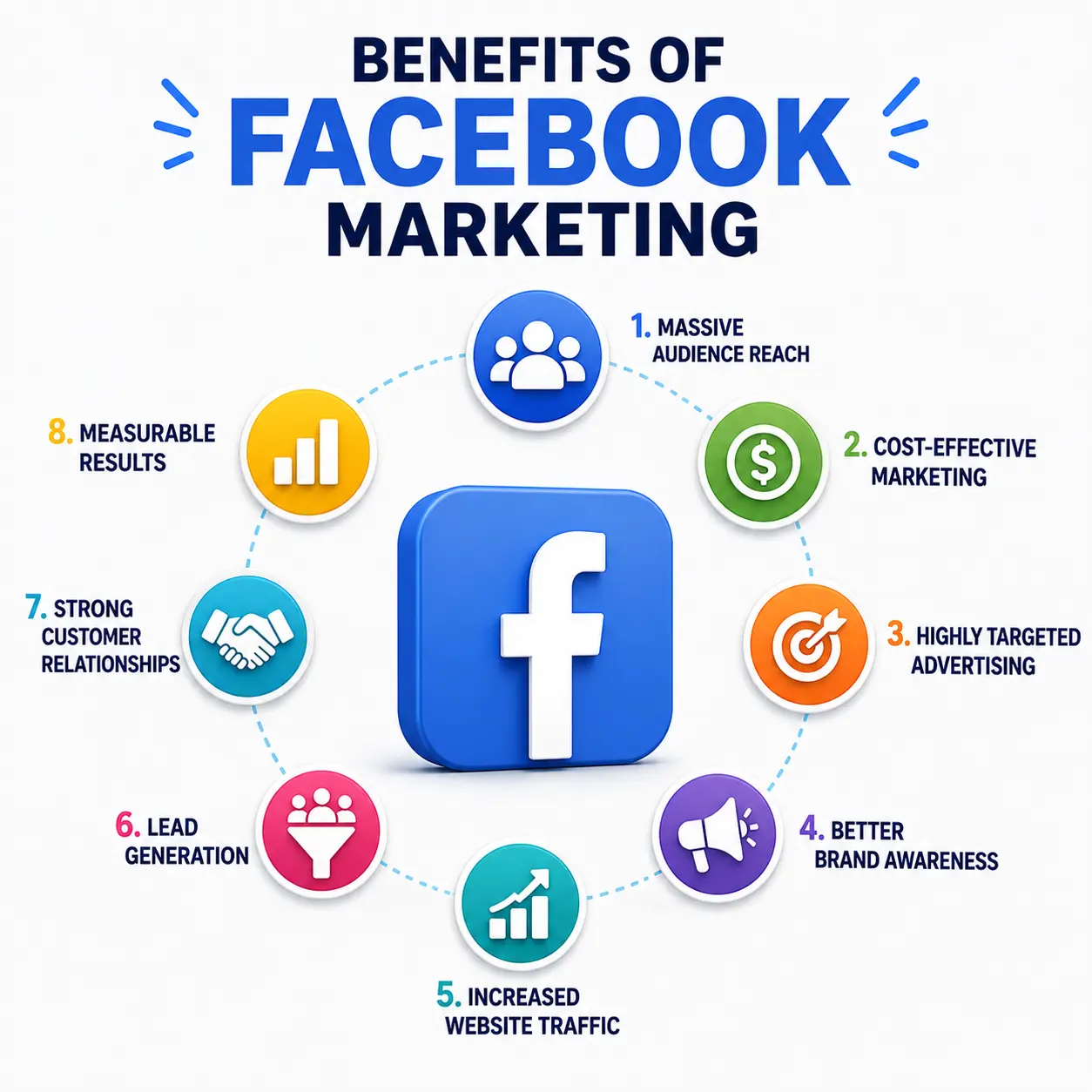
1. Massive Audience Reach
Facebook connects businesses with millions of potential customers every day. Whether your target market is local, national, or international, Facebook provides opportunities to reach people interested in your products or services.
2. Cost-Effective Marketing
Businesses can start advertising with relatively small budgets and gradually increase spending as campaigns deliver positive results. This flexibility makes Facebook suitable for startups as well as established brands.
3. Highly Targeted Advertising
Facebook allows advertisers to show ads based on:
• Age
• Gender
• Location
• Language
• Interests
• Occupation
• Education
• Relationship status
•Device usage
• Purchase behavior
• Online activity
This targeting improves the chances of reaching users who are more likely to become customers.
4. Better Brand Awareness
Consistent posting helps businesses stay visible to their audience. Over time, regular exposure increases brand recognition and builds trust among potential customers.
5. Increased Website Traffic
Businesses can use Facebook to direct users to:
• Company websites
• Landing pages
• Online stores
• Blog articles
• Booking pages
• Contact forms
Higher website traffic often leads to more inquiries and sales.
6. Lead Generation
Facebook includes built-in lead generation forms that allow businesses to collect customer information directly on the platform, making the process faster and more convenient for potential customers. This simplifies the customer journey and helps businesses collect high-quality leads.
7. Strong Customer Relationships
Businesses can interact directly with customers through comments, messages, groups, and live sessions. Quick responses improve customer satisfaction and strengthen trust.
8. Measurable Results
Facebook provides detailed analytics that help marketers understand campaign performance.
Metrics include:
• Reach
• Impressions
• Clicks
• Engagement
• Leads
• Sales
• Video views
• Conversion rate
• Cost per result
• Return on Ad Spend (ROAS)
These insights help businesses improve future campaigns.
Organic Facebook Marketing
Organic Facebook Marketing refers to unpaid methods of growing your business on Facebook.
Common organic activities include:
• Publishing informative posts
• Sharing images
• Uploading videos
• Posting reels
• Writing articles
• Hosting live sessions
• Running polls
• Responding to comments
• Participating in groups
• Building communities
Although organic reach has declined over time, it remains valuable for building credibility and maintaining customer relationships.
Paid Facebook Marketing
Paid Facebook Marketing uses Facebook Ads to reach larger audiences quickly.
Businesses can create campaigns for:
• Brand awareness
• Website traffic
• Engagement
• Lead generation
• App promotion
• Sales
• Video views
•Store visits
Paid advertising allows businesses to scale their marketing efforts much faster than organic methods alone.
Setting Up a Facebook Business Page
A professional Facebook Business Page acts as your brand’s online identity.
Important sections include:
• Business name
• Profile picture
• Cover image
• Business description
• Contact information
• Website link
• Business hours
• Services
• Reviews
• Call-to-action button
Keeping this information accurate builds trust and improves customer experience.
Types of Facebook Content
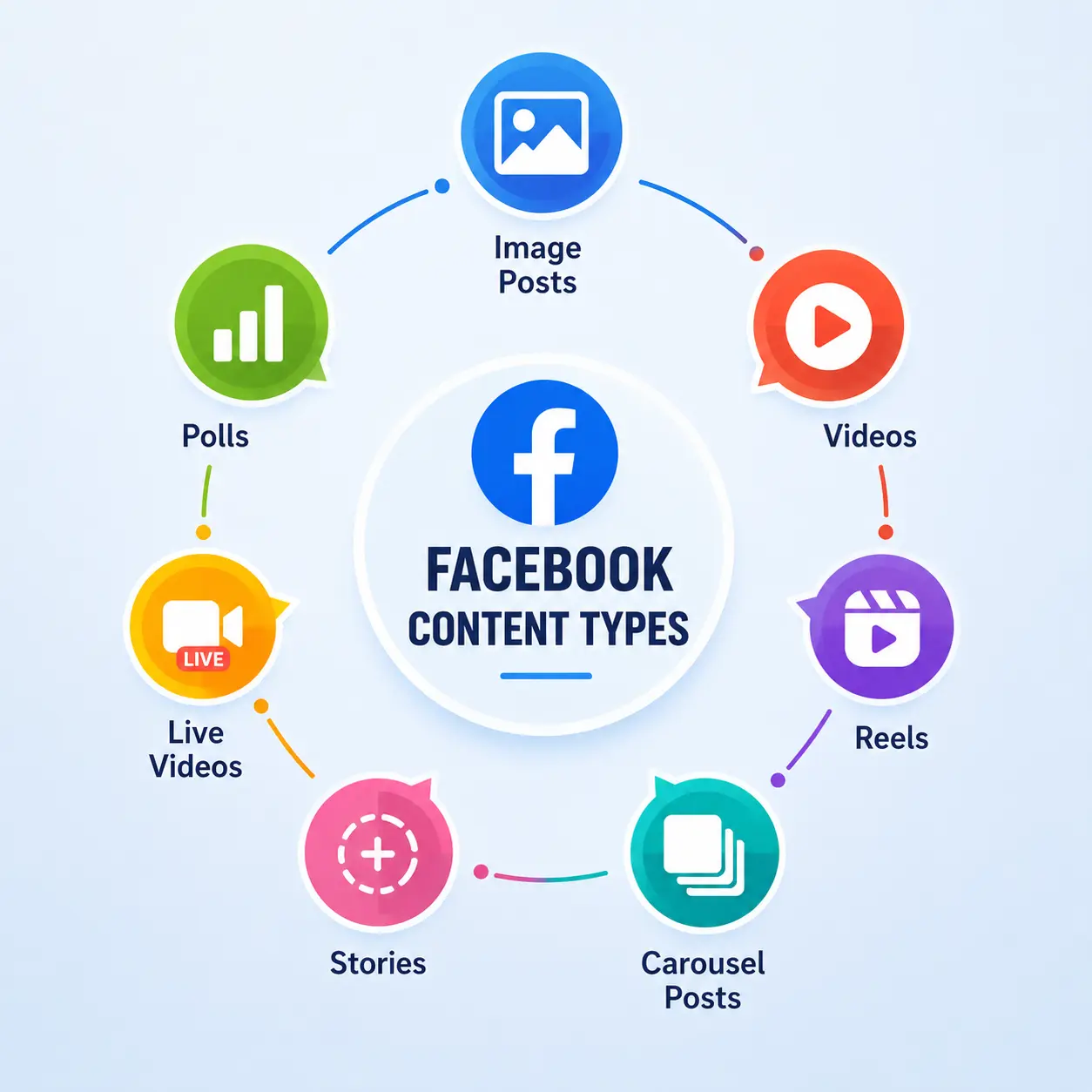
Successful Facebook Marketing depends on publishing a variety of engaging content.
Popular content formats include:
Image Posts
High-quality images attract attention and communicate information quickly.
Videos
Video content often delivers higher engagement than static posts, making it an effective way to capture attention and encourage audience interaction.
Reels
Short-form vertical videos help businesses reach new audiences.
Carousel Posts
Multiple images allow businesses to showcase products or explain step-by-step processes.
Stories
Facebook Stories remain visible for 24 hours, making them an excellent format for sharing timely updates, promotions, and engaging behind-the-scenes content.
Live Videos
Live broadcasts encourage real-time interaction with followers.
Polls
Polls increase audience participation and gather customer opinions.
Facebook Ads Manager
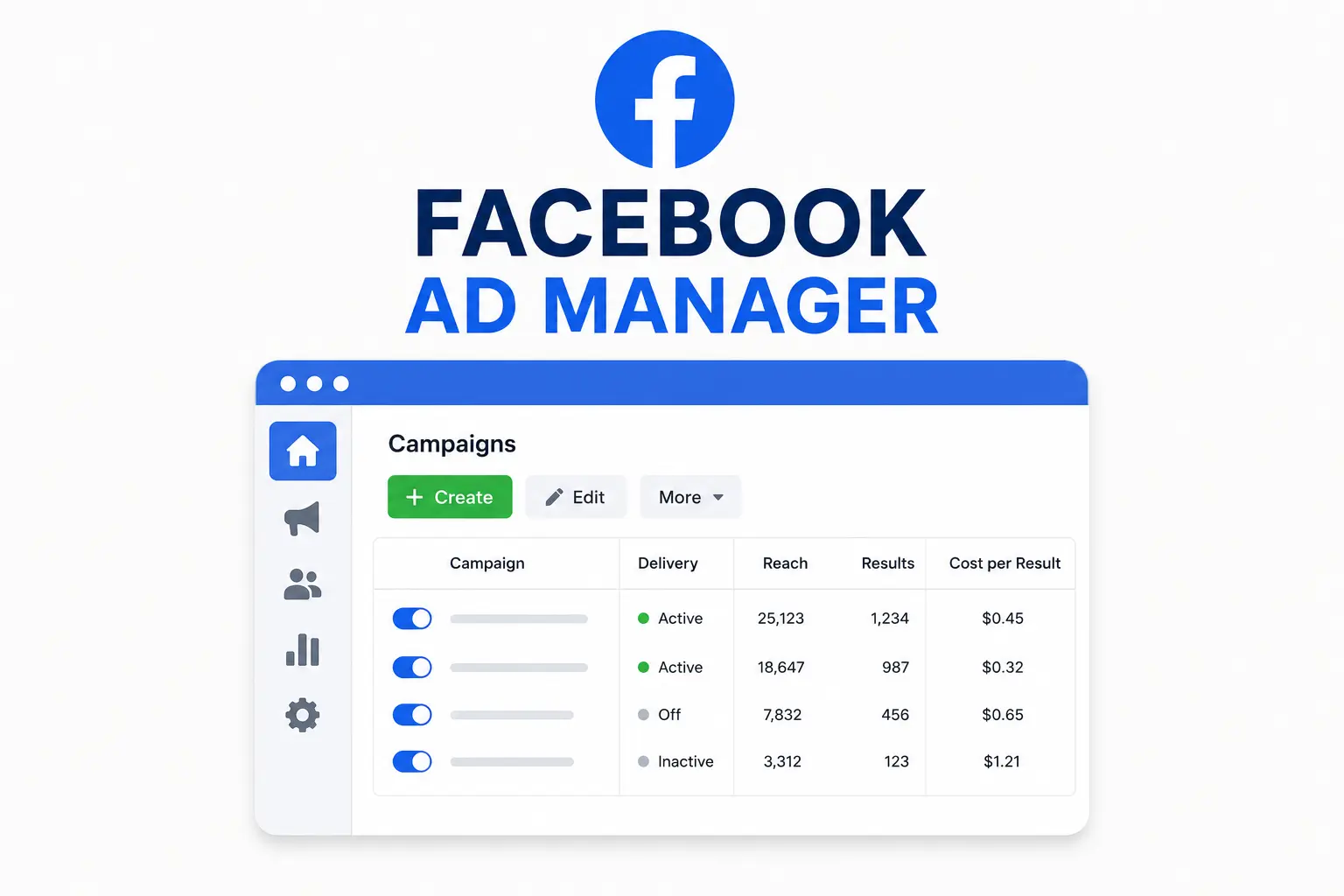
Facebook Ads Manager is the central platform used to create, manage, and optimize advertising campaigns.
Within Ads Manager, marketers can:
• Create campaigns
• Select objectives
• Define audiences
• Set budgets
• Design advertisements
• Monitor performance
• Analyze reports
• Optimize campaigns
Learning Ads Manager is essential for businesses that want consistent advertising success.
Facebook Audience Targeting
One of Facebook’s greatest strengths is its advanced audience targeting.
Businesses can target users based on:
Demographics
• Age
• Gender
• Education
• Relationship status
Location
• Countries
• States
• Cities
• Postal codes
• Radius targeting
Interests
Ads can target users interested in:
• Fitness
• Fashion
• Technology
• Digital MarketingFood
• Travel
• Beauty
• Education
Behaviors
Businesses can reach usersbased on shopping habits, device usage, travel activity, and other online behaviors.
Custom Audiences
Advertisers can reconnect with:
• Website visitors
• Existing customers
• Email subscribers
• App users
Lookalike Audiences
Facebook identifies new users who share similar characteristics with existing customers, helping businesses expand their reach efficiently.
Facebook Marketing Strategy
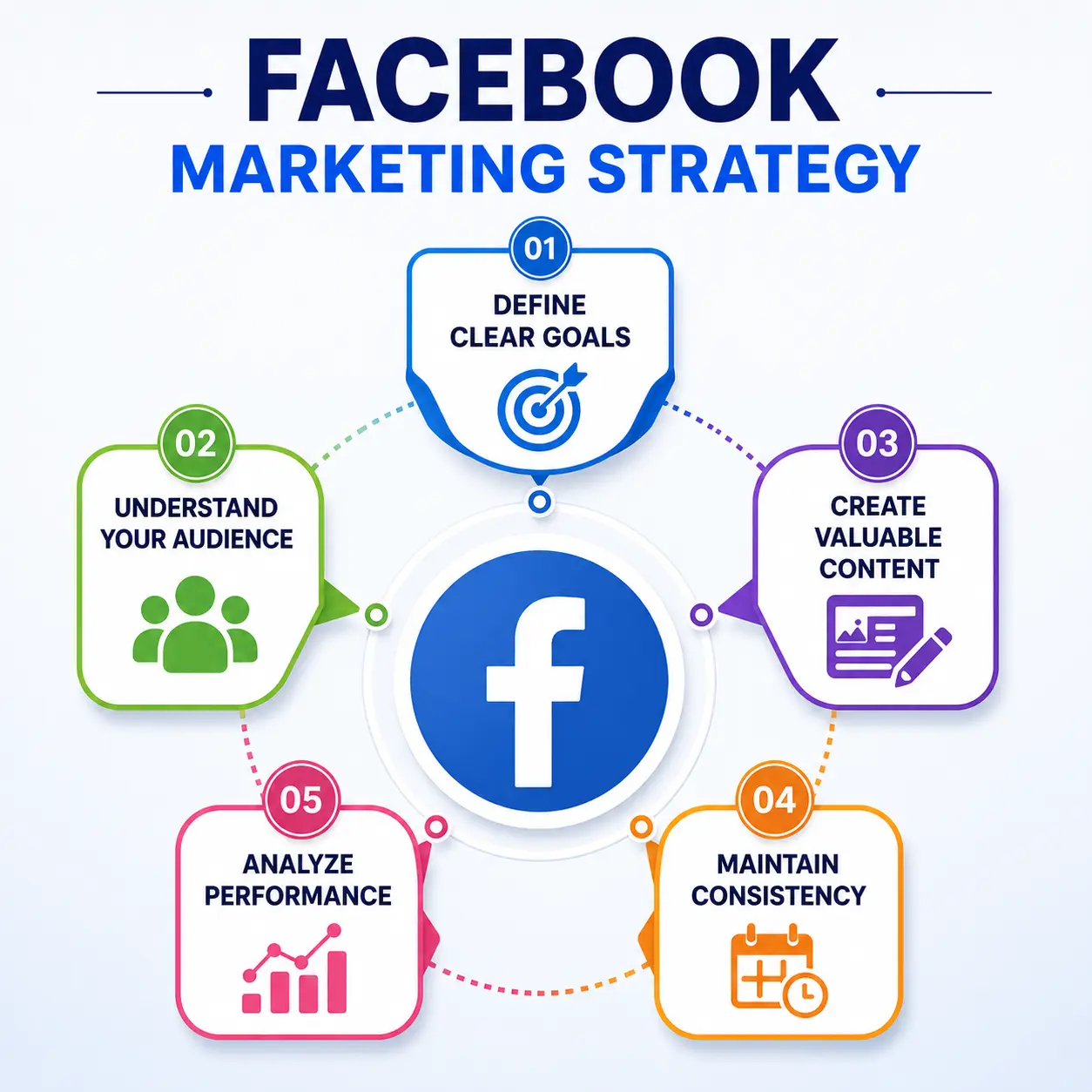
An effective Facebook Marketing strategy includes several key steps.
Define Clear Goals
Examples include:
• Increase sales
• Generate leads
• Grow followers
• Increase website traffic
• Improve engagement
• Build brand awareness
Understand Your Audience
Research customer needs, interests, age groups, and purchasing behavior before creating content or advertisements.
Create Valuable Content
Focus on educating, entertaining, and solving customer problems instead of constantly promoting products.
Maintain Consistency
Regular posting keeps your business visible and encourages long-term audience engagement.
Analyze Performance
Use Facebook Insights to understand what content performs best and adjust your strategy accordingly.
Facebook Marketing Best Practices
To achieve better results:
• Use high-quality visuals.
• Write clear and engaging captions.
• Include strong call-to-action buttons.
• Reply to comments quickly.
• Post consistently.
• Test different ad creatives.
• Optimize for mobile users.
• Monitor analytics regularly.
• Build genuine relationships with followers.
• Keep experimenting with new content formats.
Common Facebook Marketing Mistakes
Many businesses fail to achieve results because they make avoidable mistakes.
Common mistakes include:
• Posting irregularly
• Ignoring audience engagement
• Using poor-quality images
• Targeting broad audiences
• Running ads without clear objectives
• Never testing different creatives
• Ignoring campaign data
• Selling too aggressively
• Using misleading headlines
• Failing to install the Meta Pixel
Avoiding these mistakes can significantly improve campaign performance.
Measuring Facebook Marketing Success
Key performance indicators include:
• Reach
• Impressions
• Engagement rate
• Link clicks
• Cost per click (CPC)
• Click-through rate (CTR)
• Leads generated
• Conversion rate
• Cost per lead
• Return on Ad Spend (ROAS)
• Customer acquisition cost
• Sales revenue
Tracking these metrics helps businesses identify successful strategies and areas for improvement.
Facebook Marketing Trends in 2026
Facebook Marketing continues to evolve with new technologies and user behaviors.
Current trends include:
• AI-powered campaign optimization
• Increased use of short-form videos
• Personalized advertising
• Social commerce growth
• Click-to-WhatsApp campaigns
• Automated messaging
• Advanced audience segmentation
• Video-first content strategies
• Creator collaborations
• Privacy-focused advertising
Businesses that adopt these trends early are more likely to stay competitive.
Conclusion
Facebook Marketing remains one of the most powerful digital marketing channels for businesses in 2026. Its combination of organic content, advanced advertising tools, detailed audience targeting, and measurable analytics makes it suitable for businesses of all sizes.
Success on Facebook is not achieved by simply posting content or launching advertisements. It comes from understanding your audience, delivering consistent value, creating engaging content, analyzing performance, and continuously optimizing your strategy. By combining strong organic marketing with well-planned Facebook Ads, businesses can increase brand awareness, generate qualified leads, strengthen customer relationships, and achieve sustainable long-term growth.
Whether you are just starting your digital marketing journey or looking to improve your existing campaigns, investing time in learning and implementing Facebook Marketing can provide significant returns and help your business thrive in an increasingly competitive online marketplace.
AUTHOR:ARJUN